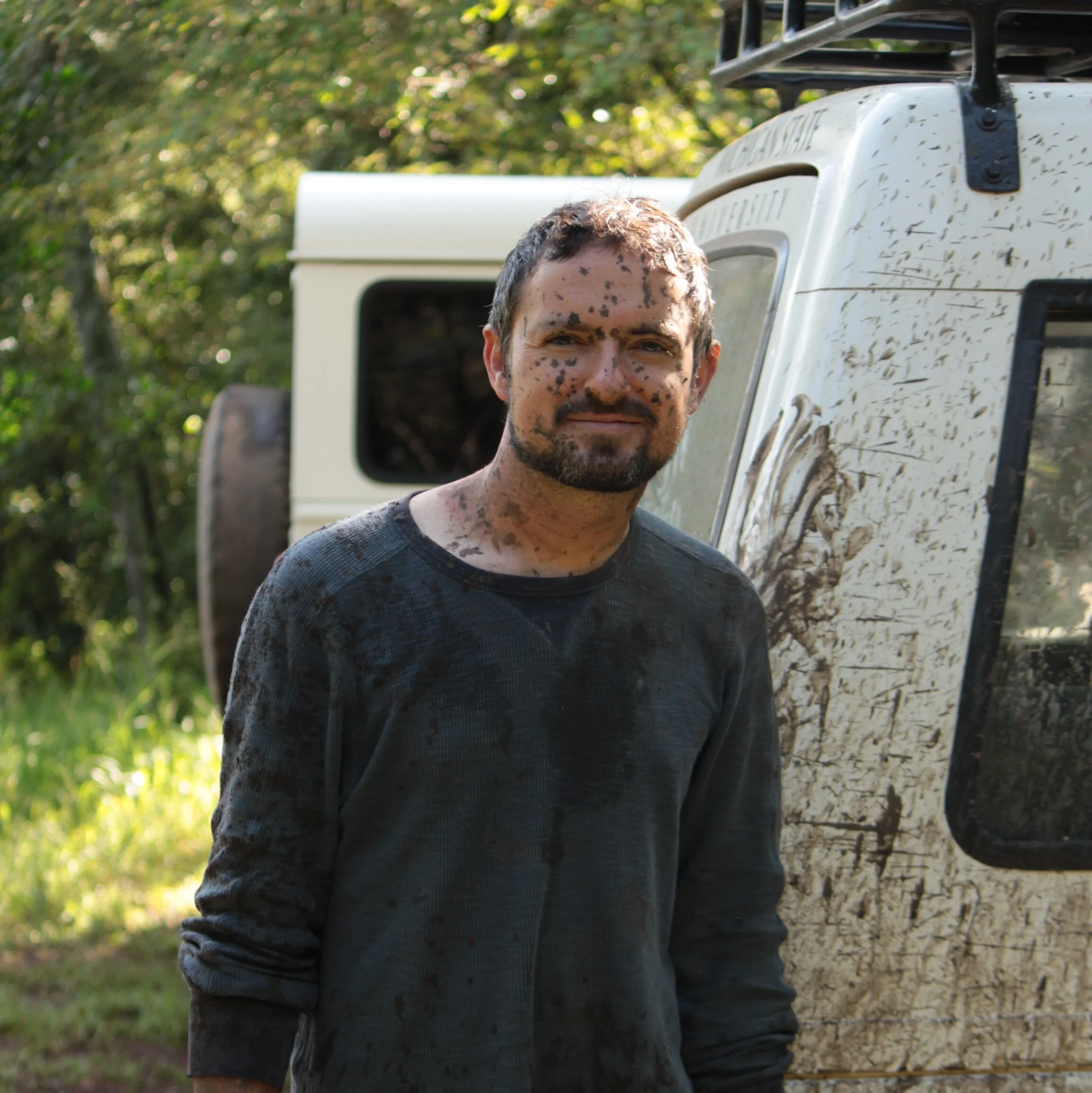
I am a scientist, researcher and speaker investigating the evolutionary drivers of communication and social complexity.
Research Areas
Animal Communication & Social Behavior
Field-Based Socioecology
Collective Behavior & Systemic Risk
Flirtation & Covert Signaling
My work
I’m a postdoctoral research associate in the Department of Ecology and Evolutionary Biology at Princeton University, where I work with Dan Rubenstein’s zebra lab. I am affiliated with the Department for the Ecology of Animal Societies at the Max Planck Institute for Animal Behavior.
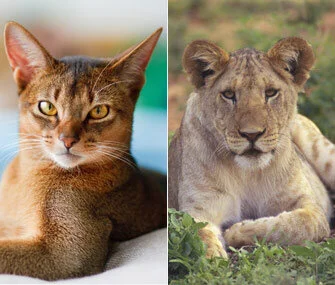
I study the evolution and function of social behavior and cognition, with an emphasis on the ways that human and animal signals shape (and are shaped by) sociality on both immediate and evolutionary timescales. My experimental and theoretical work investigates the flexible behavior of signalers and receivers in spotted hyenas, zebras, songbirds and humans. Across these varied systems I try to understand how individuals share, manipulate and interpret information within both competitive and cooperative processes. In the Daniel Rubenstein Lab at Princeton, I’m currently at work on field experiments probing the social knowledge of plains zebras, and experiments with both captive lions and domestic cats investigating the evolutionary origins of zebra stripes; I’m also involved in collaborative work using high-resolution bio-logging technology to investigate how entire “fission-fusion” animal groups coordinate cooperative behavior.
I received my PhD from the University of Pennsylvania’s graduate program in Psychology, studying with the primatologists Robert Seyfarth and Dorothy Cheney, whose foundational work on primate social cognition and communication profoundly influenced our understanding of primate minds. In a prior life I was a researcher and curriculum designer at the non-profit Education Development Center, studying educational-technology policy and practice.
Current projects
CCAS
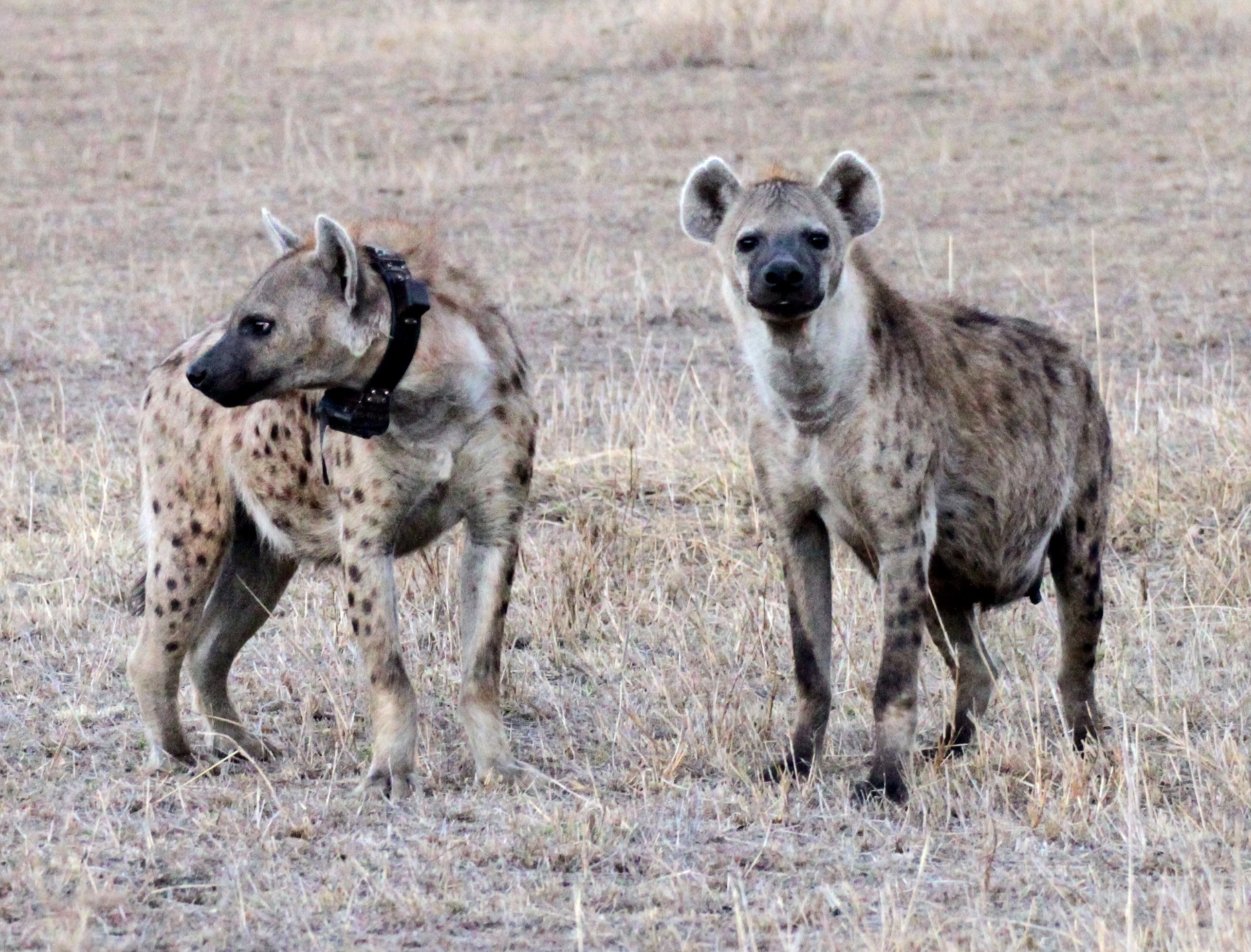
Communication & Coordination Across Scales (CCAS) is an interdiscplinary, international project funded by Human Frontier Science Program investigating how vocal communication and social relationships shape behavior in three social carnivores: meerkats, coatis and spotted hyenas.
Social Complexity & Communication in Plains Zebras
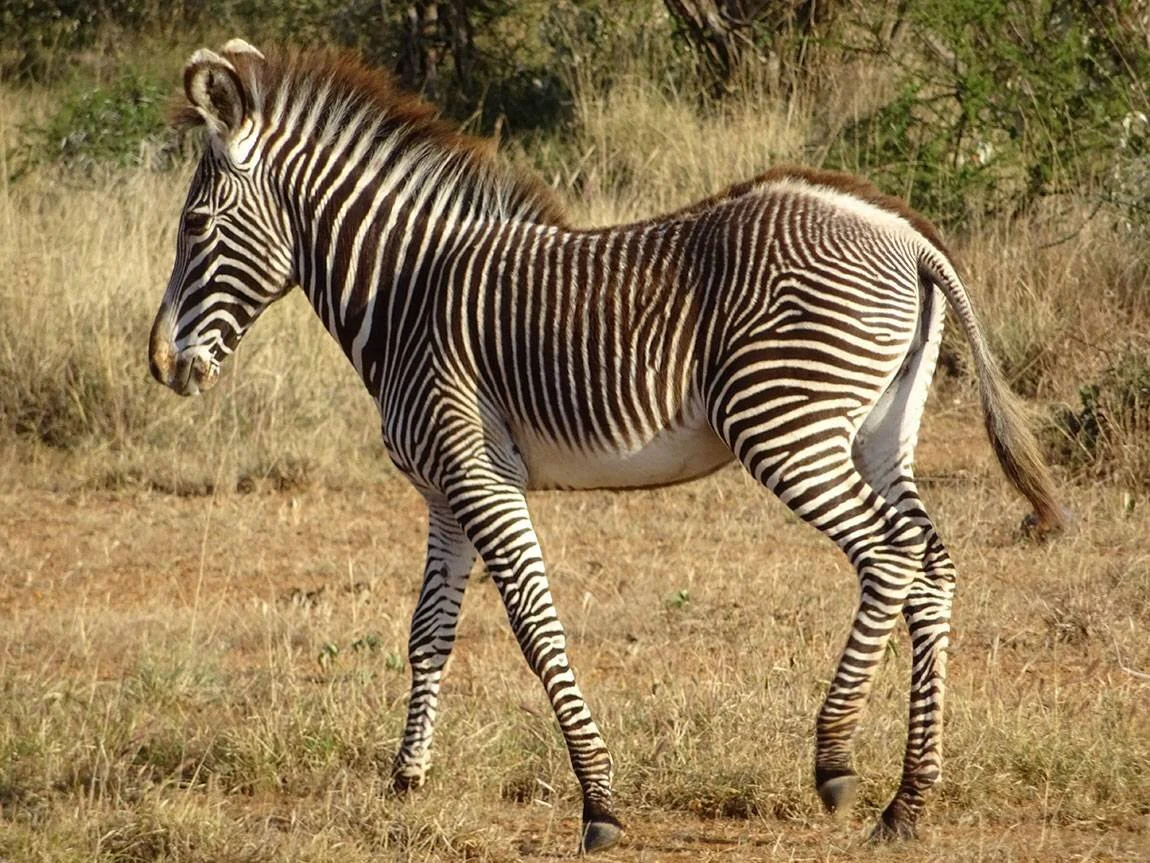
What do zebras know about their social partners, and what do they know to communicate? Unlike primates and other heavily-studied charismatic social species, zebras are large-bodied, hindgut fermenting grazers constrained to spend the vast majority of their time with heads down, processing grass. And yet, with comparably complex social structures, they nonetheless manage to do the same work of exchanging information, maintaining and reinforcing social bonds, navigating rivalries and negotiating relationships. How?
Stripes Project
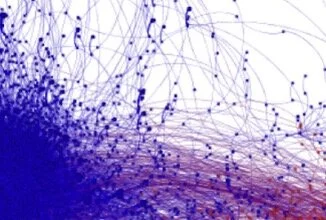
Why do zebras have stripes? The origins of zebra stripes are a fun evolutionary mystery for the same reasons that stripes themselves are such a standout in the natural world. Though investigators have claimed to solve the mystery multiple times, no single explanation has fully satisfied. The Rubenstein is exploring multiple possible evolutionary drivers that may have combined to produce and refine the stripes we see today. My own work has been focused on experiments with feline predators (both large and small), probing the possible effect of stripes on their abilities to track and capture striped prey.
Presentations & Conferences
PIIRS Global Systemic Risk
Aug 17-18, 2018 : Workshop on "Social Media, Collective Behavior, and Systemic Risk"
Miguel Centeno, Princeton University, Workshop Director & Host
Workshop Co-Organizers: Joanna Sterling, Joe Bak-Coleman, Andrew Gersick, Pawel Romanczuk
As populations of social-media sites have soared, online activity has been increasingly central to offline cultural and political events such as the UK’s Brexit vote and the recent US presidential election. In these and other cases, online networks have appeared prone to splintering, drawing individuals into informational "bubbles" that can incubate ingroup/outgroup hostilities and make participants vulnerable to misinformation and propaganda. These developments raise fundamental questions about the nature of virtual social networks and their impacts on our individual and collective well-being. We believe that an interdisciplinary conversation is needed to address these questions, as the phenomena involved range from the neural reward pathways of individuals up to the structural features of global-scale political movements.
Publications (Select)
Philosophical Transactions of the Royal Society “Physiology modulates social flexibility and collective behaviour in equids and other large ungulates” Gersick, A., Rubenstein, D.
Animal Behaviour “Long-distance communication facilitates cooperation among wild spotted hyaenas, Crocuta crocuta” Gersick, A., Cheney, D., Schneider, J., Seyfarth, R., Holekamp, K.
Behaviour “Male cowbirds vary the attractiveness of courtship songs with changes in the social context” Gersick, A., White, D.
Animal Behaviour “Ontogeny of social skills: social complexity improves mating and competitive strategies in male brown-headed cowbirds” Gersick, A., Snyder-Mackler, N., White, D.
Evolutionary Psychology “Covert Sexual Signaling: Human Flirtation and Implications for other Social Species” Gersick, A., Kurzban, R.
Affiliations & Collaborators

Princeton Zebra Lab Max Planck Institute of Animal Behavior Holekamp Lab
Mara Hyena Project CoCoMo Group NYU Privacy Research Group
Joe Bak-Coleman, Meg Crofoot, Severine Hex, Kay Holekamp, Frants Jensen, Emily Nonnamaker, Dan Rubenstein, Robert Seyfarth, Ariana Strandburg-Peshkin, Katherine J. Strandburg, Kaia Tombak, David White.
Press
The New Republic “Flirting With Humanity: The search for an artificial intelligence smart enough to love.” by Moira Weigel